
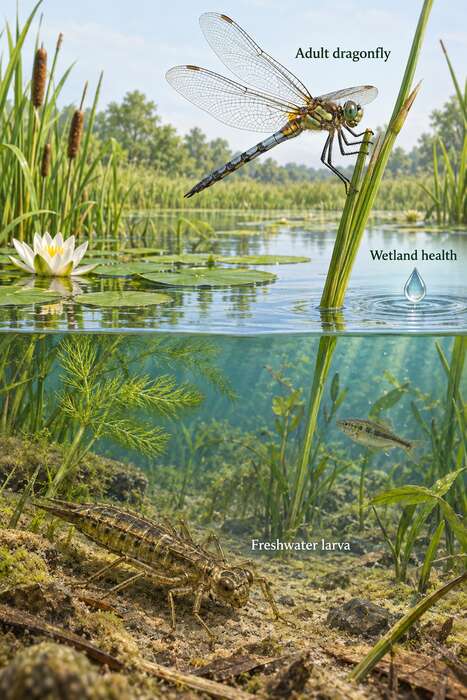
Dragonflies are predatory insects of the order Odonata. Their life cycle connects freshwater habitats with the surrounding landscape, making them useful indicators of ecological health.
Basic Details
- Order: Odonata, which also includes damselflies.
- Life stages: An aquatic larval stage, called a nymph, is followed by a winged adult stage.
- Habitats: Ponds, lakes, streams, marshes, rivers and their adjoining vegetation.
Key Characteristics
- Incomplete metamorphosis: Dragonflies develop from egg to aquatic nymph to adult; unlike butterflies, they have no pupal stage.
- Two-habitat life cycle: Nymphs depend on water quality, while adults need vegetation, prey and suitable breeding sites around wetlands.
- Predatory role: Both nymphs and adults are predators. Adults catch flying insects, including mosquitoes, while nymphs feed on small aquatic animals.
- Specialised flight and vision: Large compound eyes and powerful wings help adults detect and catch prey in flight.
Why They Are Ecosystem Indicators
- Freshwater signal: A change in dragonfly diversity can reflect altered water quality, flow, vegetation or breeding habitat.
- Landscape signal: Because the adult and larval stages use different habitats, dragonflies reveal stress in both wetlands and nearby terrestrial areas.
- Early warning value: They respond to wetland drainage, pollution, pesticide use and climate-driven changes before these pressures become obvious in wider food webs.
Conservation Status and Threats
- Global concern: The IUCN has reported that 16% of assessed dragonfly and damselfly species are threatened with extinction.
- Primary threat: Loss and degradation of wetlands remove larval habitat and adult breeding sites.
- Other pressures: Water pollution, pesticides, invasive species and climate change can disrupt prey, water availability and seasonal breeding cycles.
Significance
- Wetland monitoring: Dragonfly surveys offer a practical, low-cost way to track the condition of freshwater ecosystems.
- Food-web balance: Their predatory role helps regulate insect populations and links aquatic and terrestrial food chains.
- Conservation planning: Protecting dragonflies requires conserving clean water, native vegetation and connected wetland landscapes.
Source: IUCN