
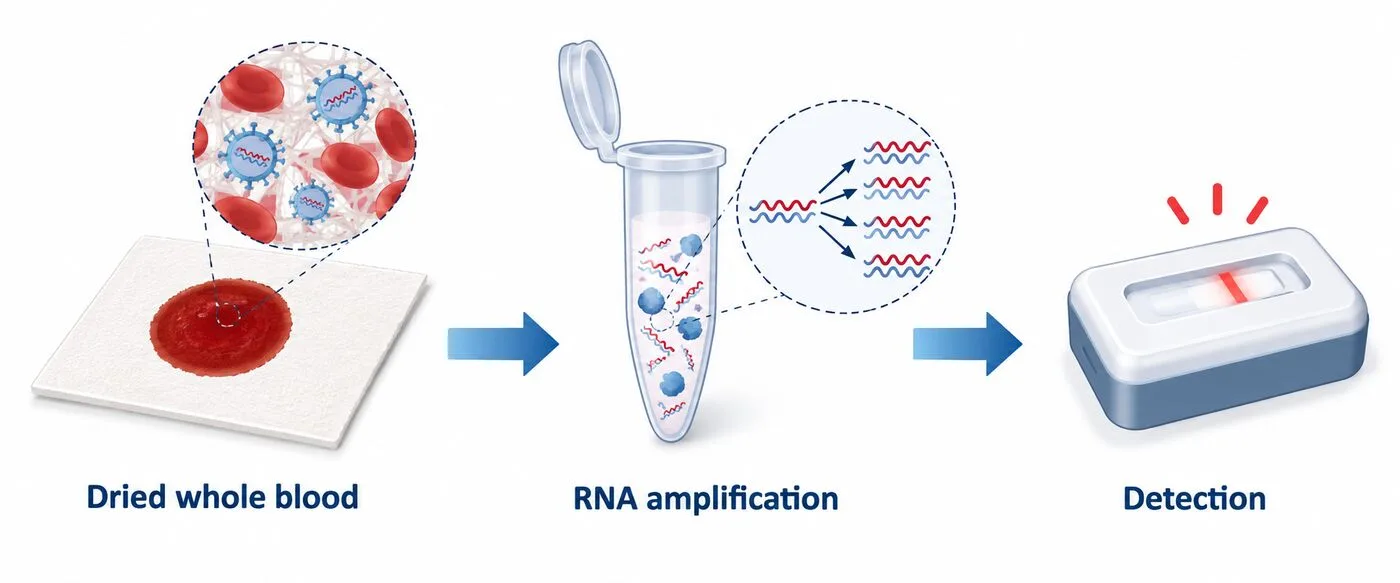
What Is It (Definition)
Ribonucleic acid (RNA) is a nucleic acid that helps cells use genetic information. Unlike DNA, which stores genetic information in most organisms, RNA performs messenger, structural, catalytic and regulatory roles; some viruses use RNA as their genome.
How It Works
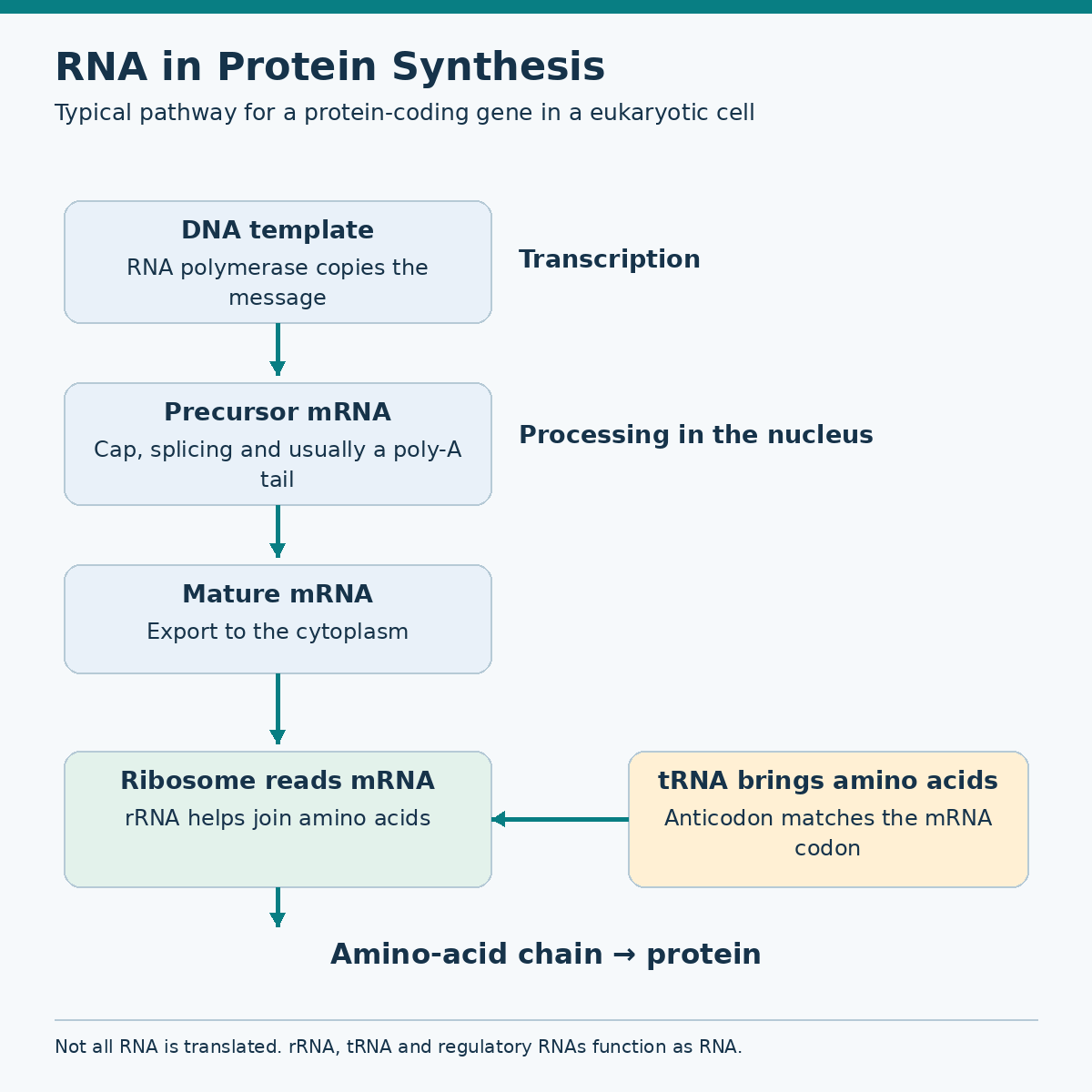
- Transcription: RNA polymerase uses one DNA strand as a template to make a complementary RNA molecule.
- Processing in many eukaryotic cells: Pre-mRNA receives a 5′ cap and a poly-A tail; splicing removes introns and joins exons. Mature mRNA can then leave the nucleus. These steps do not apply to every RNA.
- Translation: A ribosome reads mRNA in three-base codons. tRNA anticodons match the codons and bring amino acids; ribosomal RNA (rRNA) helps join them into a protein.
In bacteria, which lack a membrane-bound nucleus, transcription and translation can occur in the same cellular space and may be coupled.
Key Features
- Structure: Each nucleotide has ribose, phosphate and one base—adenine (A), uracil (U), cytosine (C) or guanine (G). RNA is usually single-stranded, but it folds when bases pair within the same strand. It uses uracil where DNA uses thymine.
- Main types: Messenger RNA (mRNA) carries a protein-coding message; transfer RNA (tRNA) matches codons to amino acids; rRNA forms the core of ribosomes. Non-coding RNA includes miRNA and siRNA (gene regulation), snRNA (splicing), snoRNA (rRNA processing) and lncRNA (varied regulatory roles).
- More than a message: RNA can provide structure, regulate genes and catalyse reactions. Catalytic RNA is called a ribozyme; the ribosome's rRNA helps catalyse protein formation.
- Chemical stability: Ribose makes RNA more chemically reactive than DNA, but an RNA molecule's lifetime varies by type and cell context.
Real-Life Relevance (Analogy)
Think of mRNA as a temporary instruction slip, while DNA is the cell's long-term archive. In an mRNA vaccine, cells read the delivered mRNA in the cytoplasm and make a target antigen; the immune system learns to recognise it. The mRNA does not need to enter the nucleus and is later broken down.
Significance
- Understanding gene expression: RNA sequencing and RNA tests help identify which genes are active or detect particular viral or cellular RNA.
- Gene regulation and therapy: RNA-interference and antisense approaches can reduce the expression of chosen genes or alter selected RNAs; applications depend on the target and face delivery and stability challenges.